Buying a Horse Transporter: What to Check & What It's Worth
Horse transporter buying guide for UK buyers: what counts as a transporter, ex-fleet considerations, EU Type 2 transporter authorisation, C licence rules and a full inspection checklist before you commit.
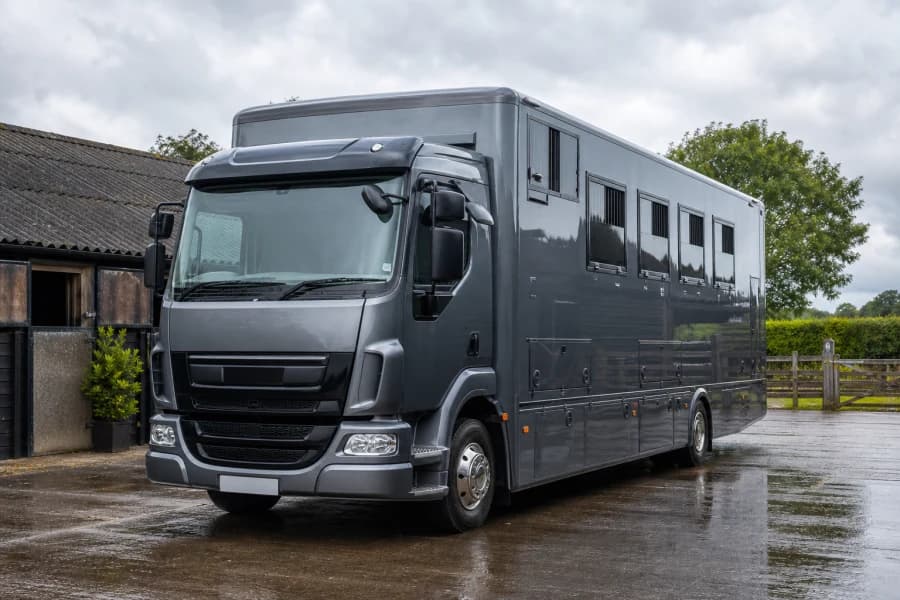

If you've outgrown a 7.5 tonne lorry or you're starting out as a professional horse transporter, the next step up is a different vehicle entirely. A horse transporter is a multi-stall horsebox built for moving several horses at once, usually on a 12 to 26 tonne commercial chassis, and almost always without living accommodation. They are work vehicles first and foremost, designed for fleet use, racing yards, bloodstock movement and one-day shows.
This guide is aimed at UK private and trade buyers looking at the transporter end of the market. We'll cover what counts as a transporter, where to find one, the licensing and welfare regulations that apply, what to check before you commit, and the price bands you can expect in 2026. If you're after something with full living accommodation as well, the horse lorries (HGV horseboxes) for sale page is the better starting point. To browse current listings, head to horse transporters for sale.
What Counts as a Horse Transporter?
In UK classifieds usage, "horse transporter" is a fairly specific category. The defining test is multi-stall plus no living: a vehicle built to carry several horses, with the cargo area given over to stalls and partitions rather than a kitchen, sleeping cab or shower. Tonnage is correlated but not definitional - a 7.5t with five stalls and no living is genuinely a transporter, while a 26t with luxury living for a single owner is not.
Practically, most transporters share the following characteristics:
- Tonnage: typically 7.5, 12, 18 or 26 tonnes. The bulk of the market sits at 18 and 26 tonnes - heavy enough for four to ten stalls and for the running gear to handle long-distance use without strain.
- Chassis: commercial-grade DAF, Volvo, Iveco, Mercedes or Scania, often shared with bus, coach or distribution platforms. Many late-model transporters are built on three-axle (6x2) chassis for stability and payload.
- Body: purpose-built coachwork, frequently aluminium-skinned for weight, with side and rear ramps, partition tracking and wash-down floors. Some are conversions of ex-Stagecoach or other ex-bus chassis - more on those below.
- Equipment: hydraulic ramps, horse-area fans, CCTV cameras over each stall, partition cushioning, side jockey doors, water tanks and rooftop air for warm-weather travel.
- No living: small grooms' seats and a cup-of-tea corner are common, but full sleeping, cooking and washing facilities are the dividing line that separates a transporter from a coachbuilt horse lorry with living.
If a vehicle has any of these features but with full living quarters, treat it as a horse lorry rather than a transporter. The buying audience is different and so is the resale market.
Who Buys Horse Transporters - and Why
Most transporter buyers fall into four broad groups:
- Aspiring professional transporters setting up a horse haulage business and looking for a vehicle that will pass DEFRA approval for Type 1 or Type 2 authorisation.
- Multi-horse yards, dealers and producers who routinely move four or more horses at once and have outgrown a 7.5t with two or three stalls.
- Racing and competition yards moving stallions, broodmares or competition horses on tight schedules where a dedicated work truck pays for itself in flexibility.
- Private buyers who want maximum payload and stall count for the money, are happy to forgo living accommodation, and would rather use a holiday cottage or trailer cabin at events.
The unifying thread is that the lorry's job is to move horses safely and reliably, often over long distances. That priority drives almost every other decision in the buying process.
Where Horse Transporters Come From
Most used transporters on the market started life in one of four homes:
- Ex-fleet from established transport companies. Yard-spec lorries from professional transporters are often replaced on rolling cycles. They tend to come with full service files, plating history, tachograph records and well-trodden interior layouts - the closest thing to a turnkey transporter you'll find used.
- Ex-bloodstock and racing yards. Stallions and racehorses tend to travel in well-specified, well-maintained transporters; a yard rebuild often releases solid five to ten year old fleet vehicles into the market.
- Ex-bus and coach conversions. A meaningful slice of the heavy end of the market is built on ex-Stagecoach, ex-First Group or other ex-passenger chassis. The chassis are designed for high mileage and low running costs, but the conversion quality varies enormously - some are properly engineered by recognised coachbuilders, others are budget self-builds. Inspect any conversion thoroughly.
- Specialist coachbuilders new builds. New transporters from established builders carry a manufacturer warranty and the latest emissions and safety kit, but the price step is significant - usually £80,000 upwards for a four to six stall build.
Auctions, classified sites and dealer forecourts all carry transporter stock. Dealer purchase typically adds a small premium but brings a warranty and some recourse if the lorry is misrepresented; private sales are cheaper but require more diligence on your part.
Driving Licences and Regulatory Compliance
Transporters sit firmly in HGV territory, so the regulations are heavier than most 3.5 and 7.5 tonne buyers are used to. Get the basics right before you settle on a budget.
- Driving licence. A transporter over 7.5 tonnes requires Category C entitlement on your driving licence. C+E is needed if you tow a trailer over 750kg behind it, which is unusual for transporters but does happen with horse-drawn carriage transport. Vehicles between 3.5 and 7.5 tonnes need C1. Pre-1997 car licences usually include C1 automatically, but never C - that's a separate test in a vehicle over 7,500kg, with theory, practical and a medical. C entitlement also needs a first DVLA D4 medical renewal at age 45, every five years until age 65, and annually thereafter - well before the age-70 standard car-licence renewal point. Always check the photocard expiry on a seller's licence if they're driving the lorry to a viewing. Our horsebox driving licence guide covers the details.
- Driver Certificate of Professional Competence (Driver CPC). Required if driving an HGV is the main part of your job. Private owners moving their own horses do not need a Driver CPC, but commercial transporters, paid drivers and anyone hauling for hire-or-reward do. The qualification involves an initial test and 35 hours of periodic training every five years.
- Operator's Licence (O-licence). GOV.UK guidance is that an operator's licence is needed if you use the vehicle commercially with a combined gross plated weight over 3,500kg in the UK. Three categories exist, distinguished by whose goods you carry and whether you go international, not by ownership of the horses. Restricted is for carrying only your own goods (here, your own horses) in connection with your business. Standard National allows the same own-account work plus carrying other people's horses for hire-or-reward, but only domestically in the UK. Standard International extends Standard National to cover international journeys as well. The trigger for "commercial" is wider than many private owners realise - GOV.UK explicitly includes "getting payment as a result of transporting horses, for example, getting prize money", so professional competitors should look closely at the rules.
- DEFRA transporter authorisation (welfare in transport). If horses travel in connection with an economic activity, you need DEFRA transporter authorisation. Type 1 covers journeys under eight hours; Type 2 covers journeys of eight hours or more and additionally requires a vehicle and container approval certificate. Drivers and handlers must hold a Certificate of Competence. The competent authority is DEFRA in England (APHA processes applications), the Scottish and Welsh Governments in those nations, and DAERA in Northern Ireland.
- Tachograph. Required for vehicles over 3,500kg used commercially. On a transporter that's used for hire-or-reward, treat the tachograph as a live legal record - drivers' hours, breaks and rest periods are enforceable.
- Plating and HGV MOT. Transporters take an annual HGV plating test at an Authorised Testing Facility, not a Class 7 MOT. The plating certificate and the most recent test history are the single most useful pieces of paperwork on a viewing.
- Direct Vision Standard (DVS) and London LEZ. Greater London charges non-compliant HGVs £100 per day under the Low Emission Zone, and HGVs over 12 tonnes also need a Direct Vision Standard rating to enter the city. A Euro 6 chassis (typically late 2016 onwards) and a current DVS permit make a meaningful difference to value if you compete or pick up horses near London.
For the avoidance of doubt: if you only ever move your own horses for unpaid leisure, most of the commercial machinery above does not apply. But the moment money changes hands - prize money included - the rules tighten quickly. When in doubt, check the GOV.UK guidance and call the Office of the Traffic Commissioner before committing.
What to Check Before You Buy
A used transporter is essentially a high-mileage commercial vehicle with a horse-area conversion bolted on. Both halves need inspecting separately.
- Chassis and underbody. Crawl underneath with a torch. Surface rust on a 15-year-old fleet chassis is normal; structural corrosion on the rear axle, leaf springs, crossmembers or sub-frame is a red flag and expensive to repair. Look for fresh undersealant - sometimes a tell that something has been hidden rather than fixed.
- Mileage and service history. Six-figure mileage is standard - many DAF, Volvo and Scania chassis pass 500,000 miles before major work. What matters is the paperwork: regular oil, filter, brake and timing belt receipts, evidence of clutch and gearbox attention, and a known fleet operator's service stamps. A thin file on a high-mileage commercial chassis is the single biggest cost risk you can inherit.
- Plating certificate. Read it end to end. Advisories - especially around brakes, suspension, ABS sensors and ramp gear - often translate into bills due before the next annual test. A short or heavily-advised plate is a negotiating lever; a fresh, clean plate with low advisories is worth a meaningful premium.
- Horse-area floor and walls. Lift the rubber matting and look for rot, corrosion, soft spots and loose rivets. Aluminium plank floors are a bonus; wooden floors are fine if dry but expensive to replace. Check the partition feet and ramp threshold particularly - they take the brunt of horse weight and urine.
- Ramps and partitions. Test every ramp - hydraulic and manual - with the seller. Hydraulic units should lift smoothly and hold position; manual ramps should be liftable by one person without strain. Inspect partitions for damage, padding wear and secure tracking. A bent or rattling partition is unsafe and needs fixing before the lorry travels.
- Cab and electrics. Sit in the cab and walk through every switch, the reverse camera, in-cab CCTV monitor, fans, lights and indicators. Warning lights on the dash - especially AdBlue, DPF and EGR codes on Euro 6 chassis - need a diagnostic readout, not a hopeful explanation.
- Tyres. A full set of HGV tyres on an 18 or 26t lorry is £2,000 to £4,500 - factor that in if any are below 4mm tread or showing sidewall cracks. Date stamps over 10 years should be replaced regardless of tread.
- Tachograph and previous use. On an ex-fleet vehicle, the tachograph history can tell you a great deal about how the lorry was used. Long motorway runs with regular maintenance are kinder to a chassis than stop-start, short-haul work.
- Plated weight and payload. Always check the VIN plate weight matches the V5C and the asking specification. Transporters carry a lot of horse - confirm the usable payload after the body and conversion are accounted for, ideally with a recent weighbridge ticket.
Typical 2026 Price Bands
Asking prices vary widely - chassis age, plating history, conversion quality, mileage and emissions standard all swing value. As a rough guide for 2026, expect:
- Budget ex-fleet (£15,000-£30,000): older 18 or 26 tonne lorries, often Euro 5 or early Euro 6, high mileage, four to six stalls, short or heavily-advised plating. Usually need immediate attention - tyres, ramp gear, plating advisories - so budget another £3,000-£8,000 for the first year.
- Mid-life fleet (£30,000-£60,000): five to ten year old transporters on solid Euro 5 or 6 chassis, six to eight stalls, sound plating and a real service file. The sweet spot for aspiring professionals and yards moving up from 7.5t.
- Late-model used (£60,000-£100,000): Euro 6, low to medium fleet mileage, modern partition and CCTV systems, often DVS-compliant, and from a known coachbuilder or fleet operator. Usually with a fresh annual plating certificate (HGVs are tested every 12 months) and tyres in good condition.
- New build (£100,000+): bespoke multi-stall transporters on the latest Euro 6 chassis, full manufacturer warranty, DVS-compliant from day one, and with the spec dialled to your operation. Significant initial spend, but predictable running costs and full flexibility on layout.
A few pricing nuances worth holding in mind:
- LEZ exposure changes value sharply. A Euro 5 transporter that can't enter London under the LEZ - or pay £100 a day to do so - is materially less valuable to anyone competing or collecting near the M25.
- Conversion quality matters more than the badge. A well-engineered conversion on a sensible chassis can outperform a poorly-converted lorry from a recognised builder. Ask who did the build, where, and whether they're still trading.
- High mileage is not a deal-breaker. Commercial chassis are designed for it. A 600,000 mile DAF with a documented engine rebuild can be a better buy than a 250,000 mile lorry with no service file at all.
New vs Used: How to Decide
Most UK transporter buyers settle on a used vehicle. New build economics are punishing in the first three years - depreciation, plating costs and warranty maintenance schedules all weigh on the balance sheet - but there are situations where new makes sense.
- Buy used if: you want the best stalls-per-pound ratio; you need to start operations within weeks rather than months; your budget is under £80,000; or you're prepared to inspect carefully and verify plating history.
- Buy new if: you need a manufacturer warranty and predictable running costs in the first three to five years; you want a specific layout (six rear-facing stalls, a particular partition system, custom CCTV); you'll keep the lorry for ten years or more and the depreciation cost-per-year is acceptable; or you cannot find used stock that meets your DVS, payload and emissions targets.
Common Pitfalls
These are the recurring problems we see flagged on used transporters - inspect each one in person rather than relying on photos:
- Heavy chassis corrosion hidden under fresh underseal or paint.
- A horse-area floor that's been patched rather than replaced - lift the rubber and feel for sponginess.
- Tired ramp gas struts and worn springs that make ramps dangerously heavy.
- Euro 6 fault codes (AdBlue, DPF, EGR) presented as "intermittent" but live on the diagnostic.
- Short or heavily-advised plating certificate, with advisories the seller hasn't priced in.
- An ex-bus chassis conversion with no documented coachbuilder - sometimes a bargain, sometimes a money pit.
- Missing or vague service history on a high-mileage commercial chassis.
- A tachograph that has been "lost" - usually it hasn't, but the records are awkward.
- Auctioned vehicles sold without warranty and without a viewing - tempting, but high risk for first-time transporter buyers.
Conclusion
A horse transporter is a serious piece of equipment and the buying process should reflect that. Spend time on the chassis, the plating history and the conversion quality before you fall for the layout. Be honest about whether you'll really use the licence, the kit and the capacity - many private buyers find that two more stalls and no living suits them perfectly, but others discover a year in that they'd have been happier with a coachbuilt 7.5 tonne lorry instead.
When you're ready to start looking, browse horse transporters for sale on Moving Manes for current multi-stall, no-living lorries from UK dealers and private sellers. For the broader market - including HGV horseboxes with living accommodation - see horse lorries for sale. And if you're sizing the right vehicle for your needs, the 12 tonne, 18 tonne and 26 tonne class pages are useful starting points.
Disclaimer: This article is for general information only and does not constitute legal, regulatory or financial advice. Welfare in transport, operator licensing and DVSA rules change periodically - always check the latest GOV.UK guidance and consult an authorised body or solicitor before committing.
Frequently Asked Questions
What counts as a horse transporter?
What licence do you need to drive a horse transporter?
Do I need DEFRA Type 1 or Type 2 transporter authorisation?
How much does a horse transporter cost in the UK?
What's the difference between a horse transporter and a horse lorry?
What MPG does a horse transporter return?
What should I check on a used horse transporter?
Horse Transporters for Sale
Browse horse transporters on Moving Manes - the UK's dedicated horsebox and horse trailer classifieds.