Running Costs of a 3.5t Horsebox: 2026 UK Guide
A clear breakdown of the annual cost of owning a 3.5 tonne horsebox in the UK - tax, insurance, MOT, servicing, fuel, tyres, recovery, storage, depreciation and ULEZ - with two worked examples for typical private use.
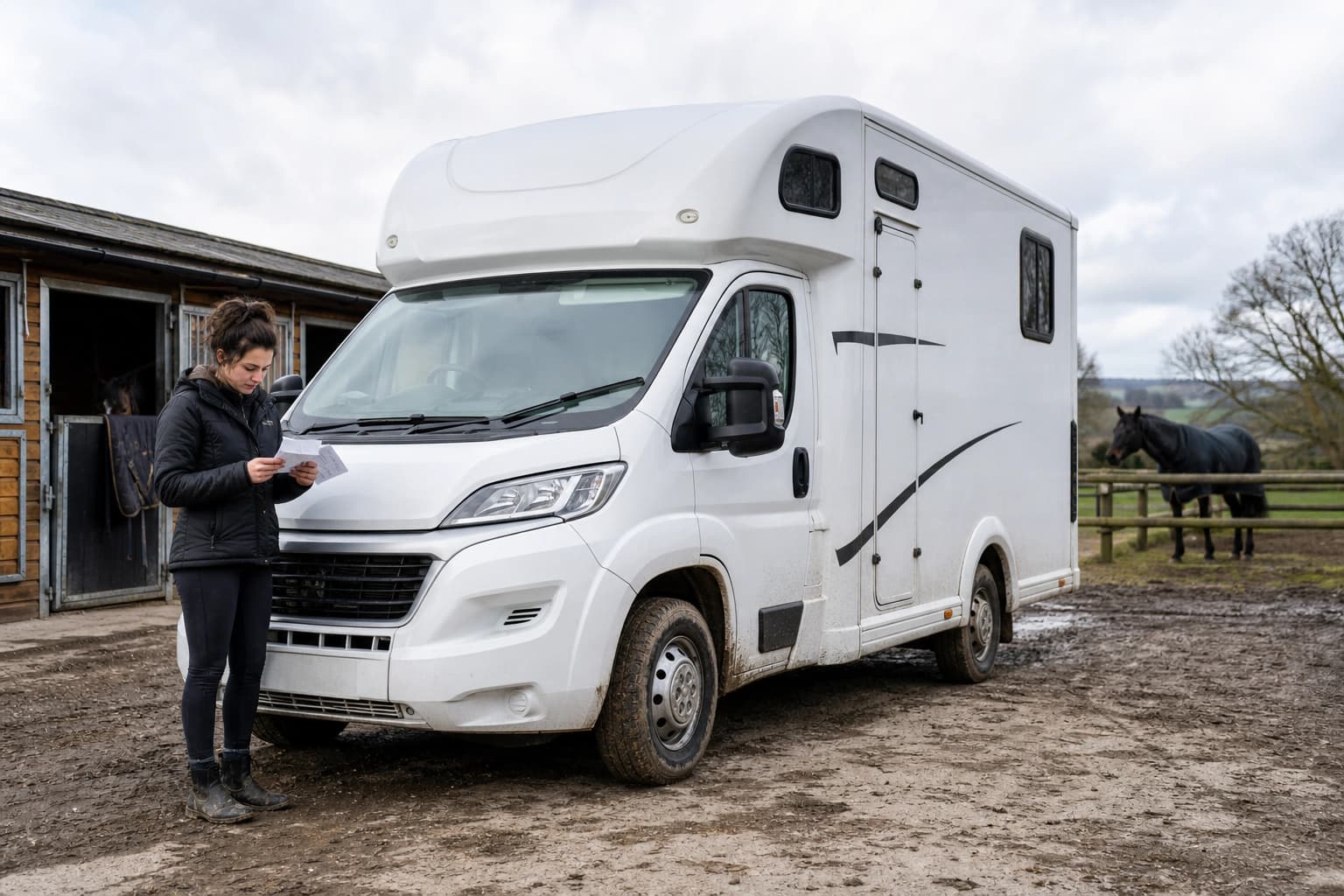

Forum threads dominate the search results when you ask Google what it costs to run a 3.5 tonne horsebox in the UK, which is a fair indication of how unevenly this question gets answered. Owners on Horse and Hound, Mumsnet and various tonnage-specific Facebook groups quote anything from £100 to £180 a month all-in, but the figures bounce around because the cost line that varies most - tax - depends on a single field on the V5C that half the people quoting don't know they should check. The numbers below are 2026 UK figures for a typical private owner, with two worked examples at the end of the headline section so you can pick the one nearest your usage and adjust from there.
The piece is deliberately about the cost of owning the lorry once you have bought it. If you are still pricing up the purchase, our 3.5 tonne horsebox buying guide covers what to check and what to pay.
What It Costs to Run a 3.5t Horsebox in 2026
For a typical UK private owner doing 3,000-6,000 miles a year, the realistic annual running cost of a 3.5 tonne horsebox sits between £1,800 and £3,500, before depreciation. The wide range comes mostly from insurance (postcode and claims-driven), fuel consumption, ULEZ exposure, and whether the lorry is parked on your own drive or in a yard.
The line-by-line breakdown for an average private year:
- Road tax (VED): £165-£345
- Insurance (private use): £300-£900
- MOT (Class 7): £58.60 fee, plus typically £100-£300 of advisories or failure work
- Servicing (routine): £200-£400
- Fuel: £600-£1,200 at 4,000 miles, 22-30mpg, £1.55/L diesel
- AdBlue: £30-£60 (Euro 6 only)
- Tyres (amortised): £80-£120 a year on a 5-tyre, 6-year cycle
- Recovery / breakdown cover: £80-£200
- Storage: £0 (own driveway) up to £600-£1,200 (yard)
Two worked examples to anchor the range:
Light private use - a Euro 6 box parked at home, 3,000 miles a year, no ULEZ exposure, named driver, garaged: roughly £1,800-£2,400 all-in. Fuel sits at the bottom of the band, recovery is a basic cover, MOT advisories are usually under £100.
Active competition use - a Euro 5 box on a yard, 6,000 miles a year, occasional ULEZ visits, two named drivers, breakdown cover with horse repatriation: roughly £3,000-£3,800 all-in. Fuel and yard storage push it up; ULEZ adds £200-£500 if you compete near an affected city.
Neither figure includes depreciation, finance interest, or the cost of unplanned major work like a clutch or timing belt. Those are covered in the relevant sections below.
Road Tax (VED)
The single biggest swing on the running-cost sheet, because most owners do not realise their tax class is wrong until they re-tax the lorry. Two classes apply to 3.5 tonne horseboxes:
- Private/Light Goods (TC11): the most common class for a 3.5t horsebox, since 3,500kg is the upper limit. The 2026 rate is £210 a year for engines up to 1549cc and £345 a year for engines over 1549cc. Most coachbuilt 3.5t boxes run a 2.3L Iveco Daily, 2.0L or 3.0L Mercedes Sprinter, or 2.2L Ford Transit engine, so they sit in the higher £345 band.
- Private HGV (TC10): a flat £165 a year. Sometimes applied to 3.5t horseboxes that started life as a heavier chassis (e.g. an Iveco Daily 70C or a Sprinter 5t plated down to 3,500kg), or where the V5C carries an HGV body type code.
The tax class is printed on the V5C and visible when you tax the vehicle on the DVLA portal. If yours says PLG and the engine is over 1549cc, you are paying £345; if it says Private HGV, you are paying £165. A small share of owners discover after several years that their lorry has been incorrectly classed - changing it after the fact is possible but slow, and DVLA will not refund overpayment beyond the current 12-month period.
Older boxes registered before March 2001 may sit on a different historical rate, often £140-£215. Direct Debit pays in twelve monthly instalments and adds roughly 5% to the headline figure.
Insurance
Annual private-use insurance for a 3.5 tonne horsebox typically falls in the £300-£900 range, with the average sitting around £400-£550 for a single named driver on a clean licence in a rural postcode. Specialist horsebox insurers (KBIS, Shearwater, Equesure, NFU Mutual, South Essex Insurance) usually beat generic light-commercial policies on both price and clauses around horse-in-transit cover, modifications and ramp damage.
The lever that moves the price most is usage class. Three categories matter:
- Social, domestic and pleasure (SDP): the cheapest. Covers competing, hacking out, and trips to and from yards.
- Limited business use: a small uplift; allows occasional commercial activity such as carrying a friend's horse for fuel-cost reimbursement.
- Hire and reward: a different product entirely, usually £1,500-£5,000+ a year. Required if you transport horses for payment or commercial benefit. Standard private policies do not cover this, and using one for paid transport invalidates the cover from the first trip.
Declare every modification - uprating, conversion year, living spec, alarm and tracker fit - accurately. Misdeclared details are the most common reason claims get reduced or refused. Our horsebox insurance guide covers what counts as a material declaration and how to compare policies properly.
MOT (Class 7)
A 3.5 tonne horsebox falls under MOT Class 7, which covers goods vehicles with a design gross weight between 3,000kg and 3,500kg. The DVSA caps the test fee at £58.60 and that figure is published on gov.uk/getting-an-mot/mot-test-fees - a centre cannot legally charge more for the test itself, though plenty charge less to attract repeat trade.
Class 7 testing is more thorough than the Class 4 test most cars get. The recurring failure points on a 3.5t horsebox are tyres (age and tread), brake disc condition, ramp hinges and springs, suspension bushes, chassis corrosion around the rear axle and wheel arches, and headlamp aim. A clean Class 7 MOT on a six-year-old box is a useful condition signal; a long advisory list is the seller telling you what they have not got round to.
Realistic annual budget: the £58.60 test plus £100-£300 of advisory or fail work. If you have a major fail year - a corroded chassis cross-member, a fail on the floor of the horse area, a serious brake job - that bill can climb to £600-£1,500 in one go. Most owners average £200-£400 a year over a five-year window.
Pre-MOT prep is a free win. Replace blown bulbs, check washer fluid, hoover the cab and lift the rubber mats so the tester can see the floor properly. A box presented well tends to come back with cleaner advisories.
Servicing and Maintenance
Routine annual servicing on a 3.5 tonne horsebox runs £200-£400 at an independent commercial garage, slightly more at a main dealer. That covers oil and filter, fuel filter, air filter, brake inspection, suspension check and a road test. Cabin filter and pollen filter are usually extra.
Beyond routine work, the items that actually drive the cost line are the major mechanical jobs that come due every few years:
- Clutch: £700-£1,500 fitted, typically due at 80,000-120,000 miles on a manual.
- Timing belt or chain: £400-£800 every 100,000 miles or 6-8 years on the engines that need it (most 2.3L Daily and 2.2L Transit diesels).
- Ramp springs and gas struts: £150-£300 every 4-5 years. The cheapest fix that owners put off and buyers spot immediately at viewing.
- AdBlue tank and SCR system (Euro 6 only): £400-£900 if the heater fails or the tank crystallises - a known issue on early Euro 6 Iveco Dailys.
- Brake discs and pads: £200-£500 a corner, typically every 40,000-60,000 miles.
- Floor replacement (horse area): £600-£1,500. Usually only needed once in a lorry's life if the floor has been kept dry.
A useful rule of thumb: budget £500-£900 a year averaged over a five-year holding period to cover routine servicing plus the share of the major jobs that fall due. Owners who spend less than that one year usually spend more the next. The Moving Manes 3.5t buying guide lists the receipts a careful seller will have on file - anything missing is usually deferred maintenance the next owner inherits.
Fuel and AdBlue
Real-world fuel economy on a 3.5 tonne horsebox sits in a fairly tight band of 22-30mpg. The variables that move the figure:
- Empty vs loaded - a 16hh horse plus tack and water knocks 3-5mpg off the motorway figure.
- Manual vs automatic - newer eight-speed autos generally beat older five-speed manuals.
- Euro standard - Euro 6 with AdBlue is leaner than Euro 5; older Euro 4 boxes are the thirstiest.
- Driving style - a steady 60mph saves £150-£200 a year over a hurried 70mph.
Worked annual fuel cost at common usage levels, assuming £1.55/L UK diesel (averaged 2025-2026):
- 3,000 miles a year at 26mpg: 524 litres, £815
- 4,000 miles a year at 26mpg: 700 litres, £1,085
- 6,000 miles a year at 24mpg: 1,135 litres, £1,760
AdBlue, on Euro 6 boxes, gets used at roughly 3-5% of diesel consumption rate. At 4,000 miles a year that works out at 25-35 litres of AdBlue, £30-£60 if you fill from a 10L container, double that at the pump. The tank holds 12-20 litres and the dash will warn well before the engine refuses to start - never let it run dry, as a forced regeneration at the dealer is £200+.
Tyres
A 3.5 tonne horsebox runs five tyres including the spare, most commonly in 195/75 R16C, 215/75 R16C or 225/65 R16C commercial sizes. Replacement cost is £80-£150 per tyre fitted, so a full set is £400-£750.
Tyres on a horsebox almost always need replacing on age, not tread. Lorries that only do 3,000-4,000 miles a year wear tread slowly but the rubber compound hardens, cracks, and loses grip in the wet long before the tread is gone. Two specifics to know:
- DOT date code: every tyre is stamped with a four-digit code on the sidewall (e.g. 3622 = the 36th week of 2022). Anything over six years old is suspect on a horsebox; over eight is past its useful life.
- Front-axle 10-year rule: since February 2021 it has been illegal to use tyres over 10 years old on the front axle of a goods vehicle in Great Britain. The MOT will fail.
Amortised, a five-tyre set replaced every six years comes to £80-£120 a year. Owners who push tyres past eight years to save money tend to spend the saving and more on a recovery callout after a sidewall blow-out.
Recovery and Breakdown Cover
Standard motoring breakdown cover - the AA, RAC, Green Flag basic policies - generally will not recover a 3.5 tonne horsebox with a horse on board. Some will not recover the lorry at all once you check the small print on weight limits.
Specialist horsebox cover from Organisation of Horsebox and Trailer Owners (OHTO), Equine Rescue Services, Liberty Horsebox Recovery or the AA's commercial vehicle add-on costs £80-£200 a year for private use. Compulsory features worth paying for:
- Recovery of the loaded vehicle to a safe destination (yard, vet, home).
- Onward transport for the horse if the lorry cannot be repaired roadside.
- A weight limit appropriate to a 3.5t lorry, plus living conversion if fitted.
- 24-hour cover with no extra charge for bank holidays.
The single most expensive false economy in horsebox ownership is buying a £40 generic breakdown policy and discovering on the M25 that the recovery operator will not touch a vehicle with a live animal in it. Ask the question before the sales call ends: "if I break down with a horse on board, what happens next?".
Storage and Parking
The cheapest storage is your own driveway, at no cost. The next tier is yard storage, typically £15-£40 a week in the UK depending on region and whether the yard offers undercover space. London and the Home Counties sit at the top of that band, the Midlands and the North-East at the bottom.
Indoor commercial storage runs £50-£100 a month and is mostly only worth the spend on higher-value Euro 6 boxes that benefit from being kept dry. A box stored outdoors year-round will need its body seals, ramp gas struts and tyres replaced more often than one kept under cover, but the difference is usually less than the cost of indoor storage on a sub-£25,000 lorry.
Insurance discounts for off-road overnight storage are real - usually 5-10% off the premium. Worth declaring properly even if you only have a gravel hardstanding.
Depreciation
Depreciation on a 3.5 tonne horsebox is gentle compared to most vehicles, which is why specialist owners hold them for 5-15 years. The pattern is unusual because a 3.5t horsebox is two assets stacked - a chassis (which depreciates roughly like a van) and a coachbuilt conversion (which depreciates much more slowly if it is well-built).
Rough year-on-year figures for a typical mid-range coachbuilt 3.5t:
- New build, year one: 15-20% off the on-the-road price.
- Years 2-5: 7-10% a year.
- Years 6-10: 4-7% a year.
- Years 11+: stable, sometimes appreciating, particularly for known coachbuilders like Equi-Trek, Empire, Aeos, Bloomfields, Helios and Fairfax.
Two factors flatten depreciation: a clean MOT history with no major fails, and a verified weighbridge ticket showing strong payload. Two factors accelerate it: a non-Euro 6 chassis (ULEZ-locked), and a tatty ramp.
For a £25,000 mid-life used buy held for five years, expect to sell at £18,000-£20,000 - £1,000-£1,400 a year of depreciation, comparable to or less than a family car. Depreciation rarely shows up on owners' running-cost sums because it is invisible until you sell, but it is real money. Our best time to sell a horsebox piece covers timing the exit.
ULEZ and Clean Air Zones
A diesel 3.5 tonne horsebox needs a Euro 6 engine (typically registered late 2016 onwards) to drive into the London ULEZ and similar Clean Air Zones without paying. The daily charge varies by city - London is the highest at £12.50, the others sit in the £8-£10 band - but the basic rule is the same: non-compliant in, charge applies. Affected zones at present:
- London ULEZ (now the whole of Greater London) - £12.50 per day.
- Birmingham Clean Air Zone (Class D) - £8 per day.
- Bath Clean Air Zone (Class C) - £9 per day.
- Bristol Clean Air Zone (Class D) - £9 per day.
- Bradford Clean Air Zone (Class C) - £9 per day.
- Sheffield Clean Air Zone (Class C) - £10 per day.
- Tyneside (Newcastle and Gateshead) Clean Air Zone (Class C) - £12.50 per day.
Greater Manchester's Class D scheme has been deferred and remains a planning consideration. Scotland operates Low Emission Zones in Glasgow, Edinburgh, Aberdeen and Dundee with similar rules and a fixed penalty rather than a daily charge.
The maths is straightforward: 30 trips a year into the London ULEZ in a non-compliant box is £375 a year. A regular weekly commute to a yard inside ULEZ approaches £600 a year. Five years of that is the price of a Euro 6 swap. If you live near an affected city, the Euro 6 chassis pays for itself; if you compete in the West Country and never touch the M25, the saving on a clean Euro 5 box is real and worth keeping.
A point that surprises buyers: ULEZ assesses by V5C-listed Euro emissions class, not by the year of the body conversion. A 2018 coachbuilt body on a 2014 Euro 5 chassis is a Euro 5 vehicle for ULEZ purposes. Always check the V5C, not the build plate.
How to Keep the Running Costs Down
The same five points come up across every owners' forum thread, and they all save real money rather than corner-cutting:
- Check the V5C tax class is correct. A misclassified PLG box can cost £130 a year more than it should. The fix is a V62 application to DVLA and a chat with the previous owner about how it ended up wrong.
- Buy specialist horsebox insurance, not a light-commercial policy. Cheaper, better-tailored cover, and the claims experience is materially different when something goes wrong.
- Use a Class 7 MOT centre that knows horseboxes. Coachbuilt bodies have quirks - water tanks, leisure batteries, ramp spring assemblies - that catch out Class 7 testers who mostly do panel vans. Same fee, fewer surprises.
- Replace tyres on age, not tread. A £400 tyre set every six years is cheaper than one motorway recovery callout. Always check the DOT codes at viewing on a used buy.
- Service before the MOT, not after. Most failures and advisories are routine wear items. A pre-MOT service catches them as scheduled work rather than emergency repairs.
- Drive at 56-60mph on the motorway. A 3.5t horsebox with a horse on board returns 3-5mpg less at 70mph than at 60mph. Over 5,000 miles that is £150-£200 of fuel.
- Fit a tracker the insurer recognises. Trackers from approved suppliers (Tracker, Smartrack, Scorpion) cut premiums by 5-15% and the saving usually pays for the kit within two years.
Conclusion
A 3.5 tonne horsebox is not a cheap vehicle to keep on the road, but the running cost is more predictable than it looks once you separate the recurring lines (tax, insurance, MOT, servicing, fuel, recovery) from the occasional larger jobs (clutch, timing belt, tyres). Most private owners spend £1,800-£3,500 a year all-in, with the spread driven by ULEZ exposure, mileage and how the lorry is stored. If you are comparing the cost of running a horsebox against running a 4x4 and trailer, the convenience premium is real - and it is what you are actually paying for. When you are ready to look at boxes, our 3.5 tonne horseboxes for sale listings are filtered by payload, MOT status, Euro standard and coachbuilder, so you can shortlist on the running-cost factors that matter most.
Frequently Asked Questions
How much does it cost to run a 3.5 tonne horsebox per year?
How much is road tax on a 3.5 tonne horsebox?
How much is insurance for a 3.5 tonne horsebox?
Is a 3.5 tonne horsebox MOT a Class 7?
What MPG does a 3.5 tonne horsebox do?
Are 3.5 tonne horseboxes ULEZ exempt?
Is a 3.5 tonne horsebox cheaper to run than a 4x4 and trailer?
How can I lower the running costs of a 3.5t horsebox?
3.5 Tonne Horseboxes for Sale
Browse 3.5 tonne horseboxes for sale on Moving Manes - the UK's dedicated horsebox and horse trailer classifieds.