Can Anyone Tow a Horse Trailer? UK Towing Rules, Tips & Common Mistakes
Thinking of towing a horse trailer? Learn who can tow, UK towing laws, what vehicle you need, the 80/20 rule, and the most common mistakes to avoid.
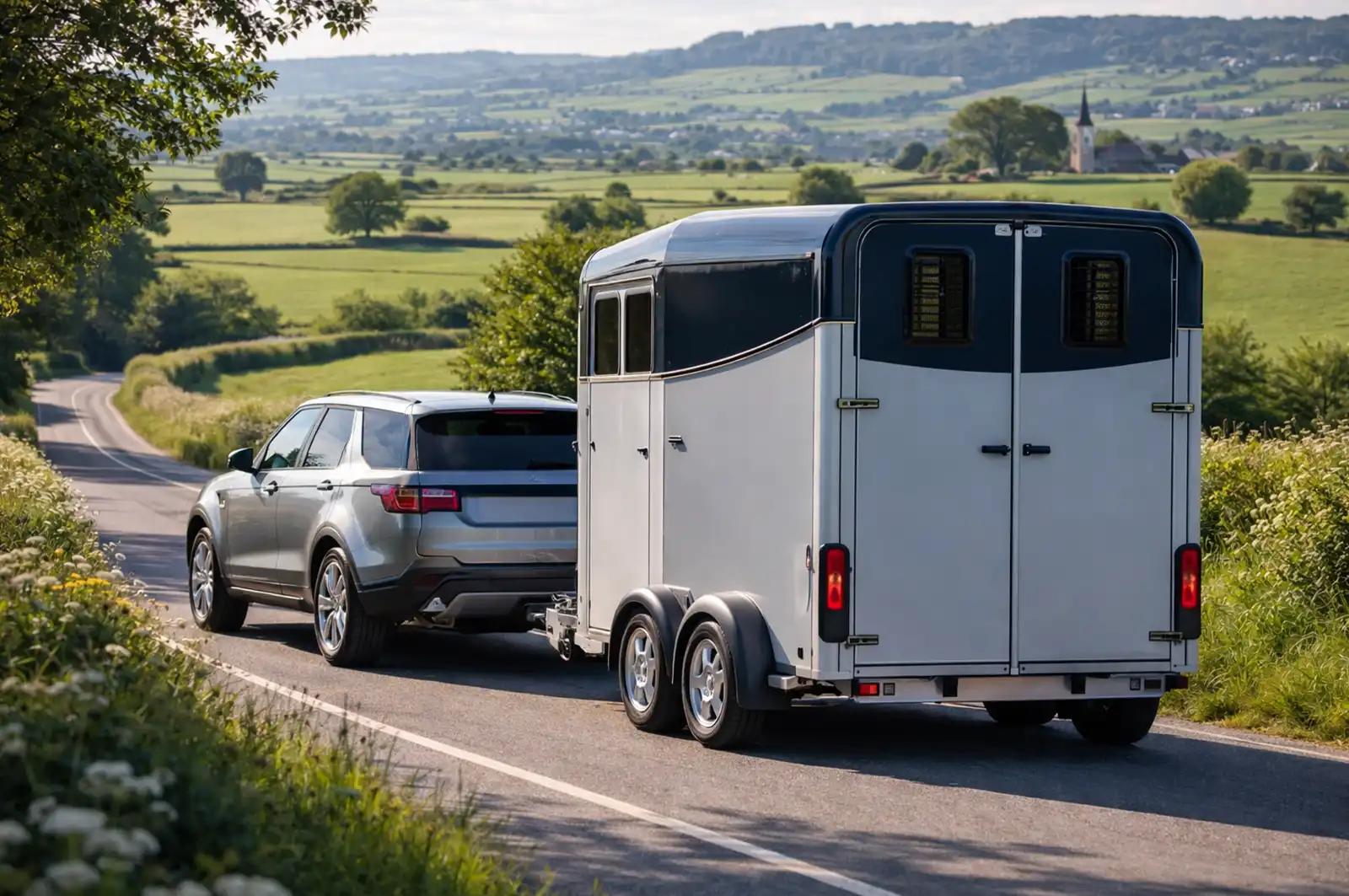

Towing a horse trailer in the UK is not as simple as hooking up the trailer and setting off - you need the right vehicle, a good grasp of the UK’s trailer towing rules, and some time to build up your confidence on the road. If you’re still looking for the right trailer, browse the latest horse trailers for sale on Moving Manes. In this article, we’ll cover everything from “Can anyone tow a horse trailer?” to “Do I need a 4x4 to tow a horse trailer?” along with helpful tips on what not to do when towing, the 80/20 rule for towing, and how tricky it really is. Whether you’re completely new to towing or just need a refresher, this guide will help you travel safely with your horse and avoid common mistakes.
Can anyone tow a horse trailer?
Legally, most drivers in the UK with a full car driving licence can tow a horse trailer, but there are important conditions. Recent changes in UK law (since late 2021) mean that drivers who passed their car test on or after 1 January 1997 are now allowed to tow trailers up to 3,500kg maximum authorised mass (MAM) without needing an additional test. In practical terms, this covers the typical horse trailer with one or two horses. If you passed your test before 1997, you likely already have towing entitlement for even heavier combinations through “grandfather rights.”
While legally almost anyone with a valid licence can tow a horse trailer, not everyone will be immediately prepared to do so safely. Towing requires more skill and knowledge than normal driving. It’s highly recommended that you practice towing in a safe area before heading out on the road with a horse. You might even consider taking a trailer towing course or lesson - even though it’s no longer mandatory, professional instruction can be invaluable for building confidence. Always ensure you feel confident and understand the basics before transporting a live animal behind you.
What are the rules for towing a trailer in the UK?
When towing a horse trailer (or any trailer) on UK roads, you must follow specific rules and regulations for safety and legality. Here are the key UK towing rules every equestrian driver should know:
- Speed limits: When towing, your speed limits are lower than normal: 60 mph on motorways and dual carriageways, and 50 mph on single carriageway roads - even if national speed limit signs are higher. In built-up areas (30 mph zones), the usual limit still applies (30 mph unless signed otherwise). Always drive at a safe speed for the conditions - often slower is wiser with a horse on board.
- Motorway lanes: Vehicles towing trailers are not allowed in the outside (right-hand) lane of a motorway with three or more lanes. You must stick to the left or middle lanes. If you inadvertently find yourself in the fast lane, move back as soon as it’s safe - staying there can result in a fine and points on your licence.
- Weight and capacity: It's illegal (and dangerous) to tow beyond your vehicle’s rated towing capacity or to exceed the trailer’s MAM. Check your car’s handbook or VIN plate for the maximum braked towing weight. Ensure the loaded trailer (including the horse, tack, etc.) does not exceed this limit. Police can stop you and even escort you to a weighbridge if they suspect you’re overweight.
- Trailer brakes and equipment: Any trailer over 750kg MAM (which includes virtually all horse trailers) must have its own working brakes. Always use a breakaway cable or safety cable when hitching up. A breakaway cable attaches from the trailer to your tow bar mounting point (not the ball itself) and is legally required. In the unlikely event the trailer detaches from the vehicle, the cable will engage the trailer’s brakes to help bring it to a stop.
- Lights and number plate: Your trailer must have functioning rear lights, brake lights, indicators, and a number plate that matches your towing vehicle’s plate. Before every journey, do a walk-around light check (get a helper to confirm the trailer’s indicators and brake lights work properly). Faulty lights not only put you at risk of an accident but can also get you pulled over by the police.
- Towing mirrors: If your trailer is wider than your towing vehicle (often the case with horse trailers), you must fit extension towing mirrors to ensure a clear view down both sides. It’s a legal requirement to have adequate rear visibility.
- Passengers and animals: Never carry people in a moving horse trailer. It’s illegal and extremely unsafe. The horse (or other livestock) should be the only occupant of the trailer while moving. Make sure any horse is tied and partitioned safely according to your trailer’s design. Also, ensure you carry your horse’s passport when traveling - by law, you should carry the relevant equine passport whenever you transport a horse.
- Insurance and breakdown cover: Check that your vehicle insurance covers towing a trailer - you may need to inform your insurer. Also, be aware that standard roadside breakdown policies usually do NOT cover the horse or recovery of a livestock trailer. It’s wise to join a specialist equine breakdown service so that if you do break down, both your vehicle and your horse trailer (with horse) can be attended to. This isn’t a legal rule, but it’s an important part of planning for emergencies.
- Commercial towing: If you are towing horses for hire or reward (commercial use) - for example, transporting horses as a paid service - there are additional rules. You would likely need a tachograph in your towing vehicle to record drivers’ hours (similar to HGV rules), and potentially an operator’s licence. Most private horse owners won’t fall into this category, but it’s worth noting that the laws are stricter if you tow commercially.
It might seem like a lot to remember, but with a bit of practice, it all becomes part of your routine. These rules are in place to help keep you, your horse, and other road users safe. With some forward planning, you can make sure you’re staying on the right side of the law every time you tow.
Is it hard to tow a horse trailer?
Towing a horse trailer can be challenging for first-timers, but with practice and the right precautions it becomes much easier. It's very different from driving without a trailer. The trailer adds significant weight and length to your vehicle, which will affect how you accelerate, turn, and brake. Additionally, you’re carrying a live animal that can move around, so smooth driving is essential.
Some aspects of towing a horse trailer that new drivers find tricky include:
- Turning and cornering: You have to take wider turns to avoid the trailer cutting the corner. For example, if you turn too sharply or close to a kerb, the trailer’s wheels might hit the kerb or verge even if your car got round it fine. It takes a bit of practice to judge corners and remember the trailer’s path.
- Braking and acceleration: A horse trailer with one or two horses can easily weigh 1-2 tonnes or more. This extra weight means it takes longer to stop. You must drive with anticipation, looking well ahead and braking earlier and gentler than you normally would. Accelerating will also be slower. It’s important to avoid sudden moves - no sudden braking or swerving - as those can destabilise the trailer or cause your horse to lose balance.
- Reversing: Perhaps the hardest skill to learn is reversing with a trailer. It feels counter-intuitive at first because the trailer will turn opposite to the way you steer. Reversing definitely takes practice - nobody masters it instantly. It’s a good idea to practice reversing your trailer in an empty car park or field with no horses inside, and maybe have an experienced person guide you. Go slowly and make small steering adjustments. (One handy tip: place your hand at the bottom of the steering wheel; then move your hand in the direction you want the trailer to go while reversing. It helps some people get the right steering input.) If it starts to jack-knife or go wrong, just pull forward to straighten up and try again. The trailer's behaviour depends on the number of axles it has.
- General handling: Because a horse trailer is tall and often wider than your vehicle, it catches more wind and requires more awareness. You’ll feel side winds more, and passing lorries might cause a bit of suction or push. The vehicle might feel “pulled” around slightly by the trailer’s movement, especially if the horse shifts weight. All of this means you need to stay alert and keep both hands on the wheel. It can be tiring over long distances until you get used to it.
The good news is that towing isn’t too hard once you get the hang of it. Thousands of horse owners safely tow trailers every day. The key is to take it seriously and not underestimate the difference from normal driving. Start with short, simple trips to build your confidence. If possible, practice with an empty trailer or with some weight - like water containers - before putting your horse in, so you can get used to how the trailer behaves. Drive routes you know well the first few times, and avoid heavy traffic or tight spots until you’re more comfortable.
Remember, you’re not just looking after yourself - you have your horse’s safety to consider. Drive as smoothly as possible: gentle on turns, gradual with speed changes, and be patient. With time and experience, towing a horse trailer will feel much more routine.
What is the 80/20 rule for towing?
You might have heard of the “80/20 rule” (or sometimes the "85% rule") when it comes to towing. This isn’t a strict law, but rather a widely recommended guideline for safe towing practice. The 80/20 towing rule means you should aim to use no more than 80% of your vehicle’s maximum towing capacity when pulling a trailer. In other words, leave yourself a 20% safety margin instead of pushing your tow vehicle to its absolute limit.
For example, if your 4x4 or car has a manufacturer-rated towing capacity of 2,500 kg, the 80% rule suggests keeping the trailer’s actual laden weight to around 2,000 kg or less. By doing so, you reduce strain on your vehicle’s engine, brakes, and transmission, and you generally get a more stable towing experience. Towing at the maximum capacity (100%) is technically allowable if legal, but it can make handling more precarious - especially with a live load like a horse that can shift weight.
Another way this rule is expressed (especially by caravan and trailer clubs) is the 85% rule, which suggests the trailer’s weight should not exceed about 85% of the towing vehicle’s kerb weight (unladen weight). The idea in both cases is similar: the tow car should be significantly heavier than the trailer for stability, and you shouldn’t be right at the edge of what the vehicle can handle. A heavier tow vehicle relative to the trailer is less likely to be “pushed around” by the trailer, and if the horse moves or the trailer sways, the car can more effectively keep it under control.
For most horse owners, following the 80/20 rule often means choosing a vehicle that has ample towing capacity for your trailer. If you find that your horse trailer’s weight is, say, 2,400 kg when loaded and your vehicle's limit is 2,500 kg, you’re at roughly 96% of capacity - that’s quite high. In such a case, even though it’s legal, you’d be wise to upgrade to a sturdier tow vehicle or a lighter trailer for an extra safety buffer. The 80/20 guideline just gives you that breathing room. It leads to less stress on the vehicle, better braking performance, and a bit of insurance if conditions get difficult (like strong winds or steep hills).
In summary, the 80/20 rule for towing is about not maxing out your towing setup. Staying under about 80% of the limit provides a margin of safety that can make your journey safer and more comfortable for both you and your horse.
Do I need a 4x4 to tow a horse trailer?
You don’t necessarily need a 4x4 (four-wheel-drive) vehicle to tow a horse trailer, but it is highly recommended in many cases. The main concern is that your tow vehicle must be capable of safely pulling the weight of the trailer plus horses, and keeping everything under control. Many people do use 4x4s (like Land Rovers, pickups, or large SUVs) because these vehicles are more suited to towing heavy loads - they often have higher towing capacities, more powerful engines, and stronger brakes. They also usually have higher ground clearance and better traction, which can be a big help if you’re driving across muddy fields at a show or pulling out of a grassy car park with a heavy trailer.
If your horse trailer is a lightweight single-horse trailer and your horse is relatively small, you might find that a sturdy estate car or a smaller SUV (even if it’s only two-wheel drive) is rated to tow it. What matters is the towing capacity - check your vehicle’s specifications. Some non-4x4 vehicles can tow 1.5 to 2 tonnes if equipped with the right engine and tow package. A double horse trailer carrying two 500kg horses (plus the trailer weight itself) will likely have a total weight of around 2000kg or more. Many regular cars cannot safely tow that much, whereas many 4x4s and pickups are designed for it.
There are a few reasons a 4x4 or similarly robust vehicle is preferable:
- Weight and stability: As discussed in the 80/20 rule, having a heavier tow vehicle makes towing safer. 4x4s and large SUVs are heavier and have a longer wheelbase, which helps reduce trailer sway.
- Towing capacity: 4x4 trucks and SUVs often have towing capacities of 2,500-3,500kg (or more), which covers most horse trailer scenarios with a comfortable margin. Regular saloon cars or small crossovers/SUVs might only tow 1,200kg or 1,500kg, which could be insufficient.
- Traction: If you only drive on dry, surfaced roads, a two-wheel drive can typically manage pulling a trailer. But in real life with horses, you will often be on grass, muddy showgrounds, uneven farm driveways, or wet fields. A 4x4’s ability to engage all wheels can prevent you from getting stuck when pulling a heavy trailer out of a slippery field or up a incline.
- Braking and suspension: Towing-oriented 4x4 vehicles usually have stronger brakes and suspension systems designed to cope with heavy loads. This can be very important when you need to slow down steadily going downhill with a horse trailer pushing behind you. The vehicle will be less strained, and you’ll have more control.
That said, if your vehicle meets the required towing capacity, has the proper towing equipment, and you stay within its limits, it can tow a horse trailer regardless of drivetrain. For example, some people successfully tow one-horse trailers with large saloon/hatchback cars, provided those vehicles are rated for the weight. Always verify the manufacturer’s towing limit and ensure you have a quality tow bar fitted.
In summary, you don’t need a 4x4, but you do need a capable vehicle. In practice, many horse owners choose a 4x4 for the added safety and versatility. If you’re in doubt, it’s better to err on the side of a more powerful vehicle. Towing a live animal is not the time to see what your small car can handle - your horse’s safety (and your own) comes first. So, while a 4x4 isn’t mandatory by law, it’s often the best tool for the job when towing horses.
Common towing mistakes to avoid
Towing a horse trailer takes practice, and even experienced drivers can fall into bad habits. Here are some of the most common mistakes - and how to avoid them:
- Overloading or uneven loading: Never exceed your vehicle’s towing capacity, and keep heavy items (like tack or feed) centred over the trailer’s axles. Too much weight at the front or back can make the trailer unstable or overload your tow bar.
- Skipping safety checks: Always do a walk-around before setting off. Check the hitch is secure, the breakaway cable is attached, lights are working, tyres are inflated, and ramps and doors are properly closed.
- Driving too fast or harshly: Towing isn’t the time to rush. Stick to speed limits (and often slower), avoid sharp corners or heavy braking, and drive as smoothly as possible to keep your horse calm and the trailer stable.
- Not using towing mirrors: If your trailer is wider than your car, extension mirrors are a legal must. Without them, you won’t have proper visibility and risk missing vehicles in your blind spots - or struggling to reverse.
- Cutting corners too tight: Take wider turns than usual to avoid the trailer clipping kerbs, signs, or other vehicles. Keep an eye on your trailer wheels in your mirrors when navigating tight spaces.
- Tailgating or poor anticipation: Leave much more space than usual - your stopping distance is longer when towing. Anticipate traffic flow ahead and brake gradually to keep everything steady.
- Assuming you're covered: Standard breakdown cover doesn’t usually include horse trailers or live animal recovery. Check your policy and consider specialist horse trailer breakdown cover.
- Rushing tricky manoeuvres: Reversing with a trailer takes practice. Don’t be afraid to ask for help or take your time - especially in busy showgrounds or tight spaces. Slow and steady wins the day.
Avoiding these mistakes makes towing safer for you and your horse.
Conclusion
Towing a horse trailer in the UK is very achievable for the average horse owner, as long as you educate yourself and prepare properly. Anyone with a valid licence and suitable vehicle can tow, but doing it safely is what really matters. By understanding the rules of the road for trailers, acknowledging the differences in handling and skill required, and sticking to recommended guidelines like the 80/20 rule, you set yourself and your horse up for a smooth, safe ride. Always choose an appropriate towing vehicle (many will opt for a 4x4 for peace of mind), and never cut corners on safety checks or maintenance.
Remember that towing confidence comes with experience. The first few times might feel daunting, but it gets easier each time you practice. Go at your own pace, and don’t hesitate to seek advice or training if you feel you need it - there’s no such thing as being too prepared when your horse’s safety is on the line. In the end, safe towing is about responsibility and vigilance. Keep your horse comfortable, drive considerately, and anticipate the road ahead.
Disclaimer: This article is intended for general informational purposes for UK drivers and equestrians. Always double-check the latest laws and your vehicle’s specifications before towing. Every driver is responsible for the safe operation of their vehicle and trailer. If in doubt about any aspect of towing (licence requirements, vehicle capability, etc.), seek professional advice or training.
Frequently Asked Questions
Can anyone tow a horse trailer?
What are the rules for towing a trailer in the UK?
Is it hard to tow a horse trailer?
What is the 80/20 rule for towing?
Do I need a 4x4 to tow a horse trailer?
What not to do when towing a horse trailer?
Does standard breakdown cover include horse trailers?
Can you tow a horse trailer on a motorway?
How do I check my vehicle’s towing capacity?
Horse Trailers For Sale
Explore all horse trailers currently listed on Moving Manes, from brand new builds to well-maintained used options.