Buying a Repossessed Horsebox: What It Means, Where to Find One, What to Check
Repossessed horseboxes are sold below private-sale prices, but the discount comes with real trade-offs. A practical UK buyer's guide: what repossession actually means, where these lorries come from, what to check, and how to pay safely.
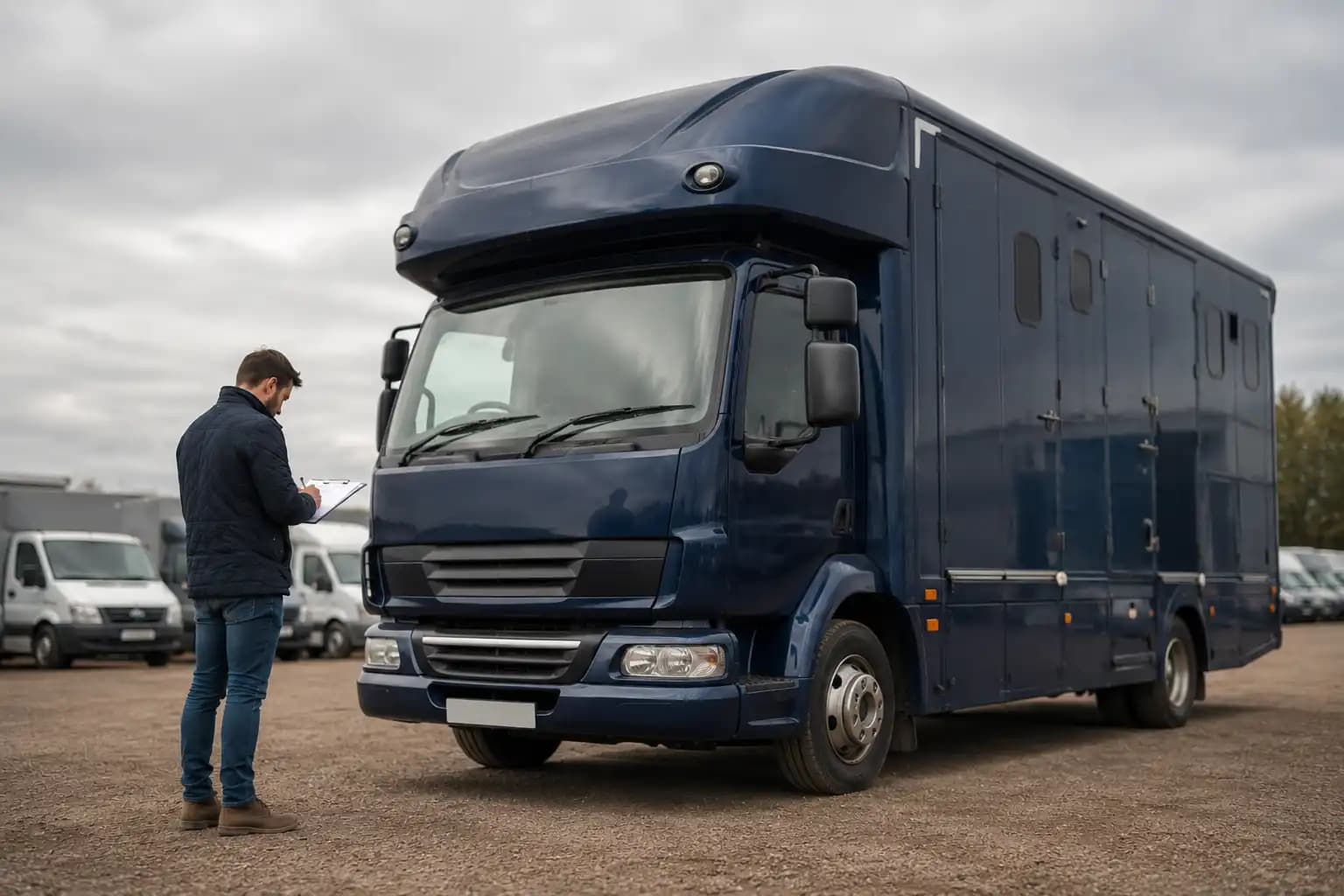

Repossessed horseboxes are a real but niche corner of the UK used market. They sell below comparable private-sale prices, sometimes meaningfully below, but the discount is not free: you take on a different set of risks compared with a normal private or dealer sale. This guide walks through what "repossessed" actually means in the horsebox context, where these lorries come from, where to find them, what to inspect with extra care, how to set a fair offer, and how to handle title and payment safely.
It is worth being honest up front: a repossessed horsebox is not the right purchase for everyone. If you want a turnkey lorry with warranty cover and a seller you can phone with a question, buy through a coachbuilder's pre-owned division or a specialist dealer with a service history file. The repossession route is for buyers with time, some mechanical confidence and budget for unknowns - in exchange for paying a meaningful discount on what would otherwise be a comparable lorry.
What "Repossessed" Actually Means
A repossessed horsebox is a lorry that has been taken back by the finance company because the buyer defaulted on the loan that funded the original purchase. Most UK horseboxes above £20,000 are bought on some form of asset finance - hire purchase, lease purchase or a commercial loan secured against the vehicle. The agreement gives the lender the right to recover the asset if the buyer falls behind. The lender appoints an asset recovery firm, the lorry is collected, settled against the outstanding debt and resold to clear what remains.
It is worth separating this from two adjacent categories that get confused:
- Stolen and recovered horseboxes go through police-channel disposals and are a very different process, usually heavily damaged.
- Insurance write-offs are sold by salvage companies and come with formal Cat S/N/B markers that affect both value and insurability.
- Ex-demonstrator and ex-fleet lorries are not repossessions at all - they are end-of-life vehicles being moved on at retail, with full history.
What we are talking about in this guide is the straightforward finance-default route: the original buyer chose this lorry, paid the deposit, ran it for some period, and stopped paying. The lorry itself is not damaged or unusual; it is the seller and the paperwork trail that changes.
A close cousin worth being aware of is the ex-finance return - a lorry handed back at the end of a finance term (typically when a balloon payment falls due that the buyer chooses not to settle), or handed back voluntarily before formal default. Ex-finance returns sit in exactly the same channels as repossessions and look the same in the auction catalogue. They are often in slightly better condition because the previous owner had no reason to neglect the lorry in the months before the handover.
Where to Find Repossessed Horseboxes in the UK
There are three main routes, and they suit different buyer profiles.
Specialist commercial vehicle auctions are the largest channel for repossessed HGV and 7.5t horseboxes. The big names - BCA, Manheim, and HGV-specific regional auction sites - run periodic commercial vehicle and recovery-asset sales, typically with a section for horseboxes and specialist conversions when the inventory builds up. Sales are usually online-attended with full catalogues a week or two ahead. Inspection windows are short - often a single day before the sale - and viewings are physical-only. Bidder registration is straightforward but you will need to deposit funds or hold a credit facility before bidding. Auction buyer premiums of 5-10% on the hammer are standard, plus VAT on the premium.
Asset recovery firms acting directly for lenders sometimes sell smaller-volume inventory off-auction, particularly for 3.5t conversions and smaller horseboxes where running an auction lot is not commercial. These deals are quieter and often more negotiable, but you usually need to know which firms work the equine finance market to find the lorries. A search for "horsebox repossession" or "ex-finance horsebox" plus your region will usually surface the active players.
Specialist horsebox dealers and marketplaces occasionally have ex-repossession stock that has been bought through the trade and is being sold on. These come with a small premium over auction price but the dealer has done the hard work of inspection, ramp and floor work, and short-term recommissioning. The seller is also somewhere you can return for support, even if there is no formal warranty. Used horseboxes on Moving Manes include dealer-resold ex-finance lorries; filter by dealer listings and read descriptions carefully - reputable dealers disclose ex-finance provenance.
A note on Facebook horsebox sale groups: occasional ex-repossession lorries appear, usually flipped by buyers who picked up cheap auction stock and want to move them on. These can be the worst of both worlds - no auction protection, no dealer accountability, and no original-owner continuity. Tread carefully.
Why They're Cheaper - and Why the Discount Has a Price
The discount on a repossessed horsebox compared with a comparable private-sale price is real and reliably 10-25% for a clean example, larger for tired ones. What you are being paid for is the bundle of small uncertainties that come with the route:
- No service history continuity. The original owner is not around to confirm when the floor was last lifted, what work was done after the last MOT advisory, or which mechanic looks after the brakes. The paperwork file is usually thin: V5C, MOT certificate, occasionally an HGV plating cert and a finance settlement letter. That is it.
- No seller you can ask questions of. A private buyer can ring the previous owner six weeks later to ask about a fault code. With a repossession, the chain stops at the auction house, who know nothing about the lorry beyond what came with it.
- Short or expired MOT or plating. Lenders do not refresh MOTs before selling repossessed stock - the lorry is sold with whatever certificate it has. Many come with under three months left, some with expired certificates. Budget for the test and any rectification work as part of the purchase price.
- Inherited deferred maintenance. A buyer who has stopped paying for the horsebox has also, very often, stopped paying for the service plan. Six to twelve months of skipped servicing is common; full neglect cases exist but are less common than the trade reputation suggests.
- No warranty. Auction sales are strictly as seen. Dealer-resold ex-finance lorries may have a short workshop warranty, but it will be narrow.
The discount is real money. On a £40,000 comparable private-sale 7.5t with a tidy specification, a 20% saving is £8,000. That covers a fresh MOT, a full service, two new tyres and a contingency budget for one unknown - and you still come out ahead. The wrong way to do it is to treat the discount as profit; the right way is to treat it as the cost of due diligence and recommissioning.
What to Check, Extra Carefully
Every check that applies to buying any used horsebox applies to a repossession too - chassis condition, ramp and floor, payload verification, MOT or HGV plating history, living quarters and electrics. Our horsebox buyer's guide and the 7.5 tonne buying guide walk through the inspection checklist in detail. On top of those, repossessions need three extra checks done specifically because of the route:
- HPI / finance check. This is the most important single check on any used horsebox and absolutely critical on a repossession. An HPI report (around £20, run in minutes online) confirms there is no outstanding finance on the lorry, no theft markers, no mileage discrepancies and no insurance write-off history. Outstanding finance becomes the new owner's legal problem - the finance company can recover the lorry from you even after a clean sale. Auction houses usually guarantee clear title for their lots; specialist dealers should too. Verify this in writing before paying, and run your own HPI as a belt-and-braces check.
- MOT and plating history on gov.uk. Run the registration through the gov.uk MOT history checker and read every advisory carefully. A pattern of the same advisory appearing across multiple tests - corroding brake pipes, perished bushes, a soft floor noted but not failed - is the signal that the previous owner was nursing the lorry. That tells you what the first six months of ownership are likely to cost.
- Evidence of pre-repo neglect. Lift the rubber mats in the horse area to check the floor for soft spots or rot - a common deferred-maintenance victim. Check the ramp gas struts and springs - if the ramp is heavy or struggles to hold up, the springs are tired. Inspect the underbody and chassis around the rear axle, spring hangers and crossmembers for fresh undersealing that might be hiding corrosion. Check the AdBlue tank and DPF on Euro 6 chassis for active fault codes. The condition tells you the story of the last twelve months of ownership.
Two further notes worth adding. First, take the lorry to a weighbridge before completing the purchase if at all possible - a recent weighbridge ticket from before sale is rare, and unverified payload is one of the bigger risks of buying without seller continuity. Second, on a 7.5 tonne or HGV repossession, the annual HGV plating certificate carries the same weight that an MOT does on a smaller lorry - read the advisories carefully. A plating cert with substantial advisories means rectification work is already coming.
What's a Fair Offer
For an auction-sold repossession, the auction process sets the price. Your job is to set your walk-away figure before bidding and stick to it.
That figure is built from three numbers:
- The comparable private-sale price for a clean example of the same lorry. Use our How to Sell a Horsebox framework to gather 5-10 private-sale comparables on age, mileage, payload and living spec.
- A defensible estimate of recommissioning cost in the first six months: MOT and rectification, a full service, tyres if needed, ramp springs, floor work if suspect, any electrical or living-quarter issues that came up on inspection. £1,500-£5,000 is a working range for a generally clean 7.5t; tired examples can run to £8,000 or more.
- A contingency for at least one unknown that did not come up on inspection. Five to ten per cent of the headline private-sale price is sensible.
Subtract recommissioning and contingency from the comparable private-sale price. That is your maximum bid, including auction buyer premium and VAT. Anything below is fair; anything above and you are paying private-sale money for an auction-sale risk profile.
For a dealer-resold ex-finance lorry, the same maths applies but the dealer has usually already covered the recommissioning cost - look for an itemised pre-sale check list and budget the contingency only.
Paying Safely and Taking Delivery
The payment process for repossessions is a little tighter than private sales because there is no give in the title transfer.
At a commercial vehicle auction, the standard sequence is: hammer drops, you have 24-48 hours to clear the full balance (hammer price plus buyer premium plus VAT) via bank transfer or cleared funds. Title transfers once funds clear. The lorry must be collected from the auction yard within a defined window, usually a week, after which storage charges apply. Drive-away insurance for the first journey home is the buyer's responsibility - some auction houses sell short-term cover at the desk.
For a dealer-resold ex-finance lorry, the process is closer to a normal dealer sale: deposit holds the vehicle, balance on collection by bank transfer, V5C and keys hand over together, and the dealer typically helps with first-journey insurance.
In every case: bank transfer in full, sender's name visible, lorry stays in the seller's possession until funds are confirmed cleared. Cash, banker's drafts and cheques are all worse options for a transaction this size, for the same reasons set out in our selling-side guide. The simple rule that prevents most disasters: do not collect the lorry, take the V5C green slip or be handed the keys until the funds are settled and visible in the seller's account.
Is a Repossessed Horsebox Right for You?
The honest answer comes down to a few questions:
- Do you have time for inspection and recommissioning? A repossession is not a same-week purchase. Allow two to three weeks for HPI, inspection, MOT (if needed), and a service window before you actually use the lorry.
- Do you have budget headroom for unknowns? The headline saving disappears if you cannot cover £3,000-£8,000 of first-six-months work without straining the purchase budget.
- Are you confident on a chassis-level inspection, or do you have someone who is? A pre-purchase inspection by an independent HGV mechanic costs £150-£300 and is the single best protective measure on any repossession. Skip the saving rather than skip the inspection.
- Do you need warranty cover or seller continuity? If yes, this is the wrong route. Buy from a coachbuilder pre-owned division or a specialist dealer with a service workshop.
If the answers stack up, a clean repossessed horsebox can be a substantially better deal than the equivalent private sale. The buyers who do well on this route treat it as an asset purchase with diligence costs built in, not a bargain hunt.
Other Reading on the Buying Process
If you are weighing up a repossession against other routes, these guides cover the wider picture:
- The horsebox buyer's guide - the overall framework that applies to any used purchase
- Buying a 3.5t horsebox - tonnage-specific inspection points for car-licence horseboxes
- Buying a 7.5t horsebox - the HGV-class inspection points and C1 licensing
- UK horsebox manufacturers guide - the major coachbuilders and which ones come up most often on the used market
- How to sell a horsebox - the seller-side view, useful for understanding what a fair private-sale comparable looks like
- Understanding horsebox payloads - the weighbridge and payload checks that matter most
You can also browse used horseboxes for sale on Moving Manes directly to see current dealer and private-sale comparables - the easiest way to ground-truth what a repossession should actually cost.
Disclaimer: This guide is intended for informational purposes only and does not constitute financial, legal or commercial advice. Auction terms, finance check requirements and consumer protections vary; always read the specific terms of any sale and consider an independent inspection before committing.
Frequently Asked Questions
Where do repossessed horseboxes come from?
Are repossessed horseboxes worth buying?
How much cheaper are repossessed horseboxes than private sales?
Can I get finance on a repossessed horsebox?
Are there warranties on repossessed horseboxes?
How do I check a horsebox for outstanding finance?
What's the difference between a repossessed horsebox and an ex-finance lorry?
Used Horseboxes for Sale
Explore used horseboxes currently listed on Moving Manes. Find the perfect used horsebox for your needs.