How to Sell a Horsebox: A UK Seller's Guide
A practical step-by-step guide to selling your horsebox in the UK: what it's worth, when to list, how to prepare the lorry, where to advertise, how to write a listing that actually sells, what paperwork to have ready, and how to handle viewings, payment and post-sale admin safely.
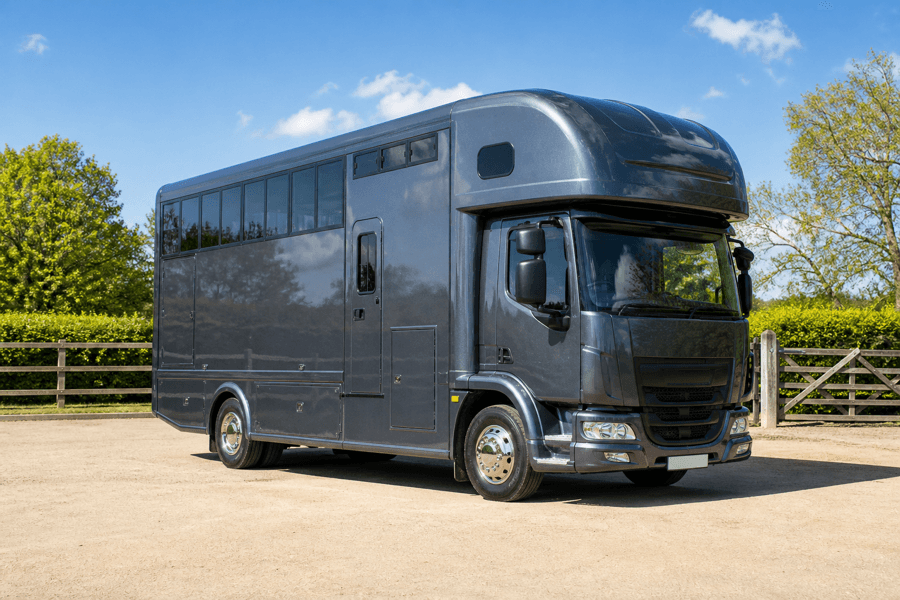

Selling a horsebox in the UK in 2026 is its own discipline. Buyers want HGV plating certificates and weighbridge tickets, not just photos and a price. Pricing has tightened around ULEZ-compliant Euro 6 chassis, and the platforms sellers use have shifted - the Facebook groups have got louder, auction houses have got quieter, and a handful of specialist marketplaces have grown up alongside the established names. This guide walks through the whole process for a UK private seller: what your horsebox is realistically worth, when to list, how to prepare the lorry, where to advertise, how to write a listing that doesn't burn your evenings on enquiries from time-wasters, what paperwork to have ready, and how to close the sale safely.
What's My Horsebox Worth? Setting a Realistic Asking Price
There is no Parker's guide for horseboxes. No two are exactly alike: chassis age, coachbuilder, payload, condition, living spec and ULEZ status all stack up differently, and the buyer pool is small enough that pricing is comparable-driven, not formula-driven. The good news is that with a bit of research you can place your lorry inside a defensible price range fairly quickly.
As a starting point, asking prices for UK horseboxes in 2026 fall into four broad bands. These are guide ranges for advertised prices - private sales typically settle 3-10% lower after negotiation.
For a 3.5 tonne horsebox:
- Budget (£6,000-£12,000): older conversions, often 12+ years old on a Euro 4 or 5 chassis, with a short or expired MOT, basic spec, no living, and limited or unverified payload.
- Mid-range (£12,000-£22,000): solid coachbuilt 3.5t boxes, usually 6-12 years old on a reliable Euro 5 or early Euro 6 chassis, day-living or partition seating, healthy payload and a recent MOT. The sweet spot for most private buyers.
- Modern used (£22,000-£40,000): late-model used or nearly-new, Euro 6, full living (sleeping, hob, leisure battery), good payload and recent service history. Built by a known coachbuilder.
- New and luxury (£40,000-£75,000+): new builds and bespoke high-end 3.5t boxes with full living, large payload, premium finishes (heating, hot water, slide-outs) and a manufacturer warranty.
For a 7.5 tonne horsebox:
- Budget (£8,000-£18,000): older conversions, typically 15+ years old, Euro 4 or 5, basic spec, day-box or partition seating, short or expired HGV plating, limited payload. Expect to budget for some immediate work.
- Mid-range (£18,000-£40,000): coachbuilt 7.5t boxes 8-15 years old on a Euro 5 or early Euro 6 chassis, day-living or basic sleeping, 2,000kg+ payload and a recent annual plating test. The sweet spot for buyers who travel regularly but don't need full luxury living.
- Modern used (£40,000-£80,000): late-model used 7.5t with Euro 6 emissions (LEZ-compliant), full living for two to four, recent service history and a build by a known coachbuilder (Oakley, Sovereign, George Smith, Whittaker, PRB).
- New and luxury (£80,000-£200,000+): new builds and bespoke high-end 7.5t boxes with full luxury living, slide-outs, large stalls for three or four horses and a manufacturer warranty.
For an HGV class horsebox (10 tonne and above), the buyer pool is much narrower and pricing more variable. Most private 10t-18t lorries sell between £30,000 and £150,000 depending on chassis age, coachbuild quality, living spec and how recently the operator's licence requirements were navigated. New high-end units run well above £200,000.
Once you have a sense of the band your lorry sits in, work through these four steps to land on an actual asking price.
Step 1: Research 5-10 comparable listings. Start on a specialist horsebox marketplace - the main listings page, the 3.5 tonne listings or the 7.5 tonne listings - and gather examples matching your tonnage class, age band, payload and living spec. Add a few dealer prices and a few from Facebook groups. Note their asking prices and how long each has sat without a price drop.
Step 2: Position your box within the range. A long MOT or HGV plating with clean advisories, full service history, recent tyres, a verified weighbridge ticket and high-spec living all push toward the top. Average condition, basic living and an older Euro chassis sit in the middle. Worn ramp springs, short MOT, unverified payload, missing service history and ULEZ non-compliance pull toward the bottom. Be honest with yourself - most sellers overestimate by one band.
Step 3: Build in 3-10% negotiation room. UK horsebox sales settle at roughly 90-97% of asking. If you would take £25,000, list at £26,500-£27,000. Round numbers attract more low-ball offers than slightly off-round numbers like £26,750, which signal a calculated price.
Step 4: Adjust for season. Demand peaks in late April and early May. If you are listing then, sit at the upper end of your researched range. If you are listing in November or December, expect the lower end and a longer time-on-market. The seasonality deep-dive covers the search-volume data behind this.
One contrarian note. The cheapest 7.5t in the search results is rarely a bargain - boxes priced well below the comparable range usually have HGV plating advisories about to fail, hidden chassis corrosion or a non-runner Euro 4 engine. Price your lorry fairly and evidence the price in the listing; you will get fewer but better-qualified enquiries.
When to Sell: Timing the Market
Horse riding is seasonal, and so is horsebox demand. We have written a longer piece on the seasonality of horsebox prices, but the seller's-eye summary is short enough to give you here.
Search interest for horseboxes in the UK climbs sharply through March, peaks in late April and early May as the competition season starts in earnest, and stays elevated through July. If you can wait, that is the window to list in. Well-presented lorries sell quickly and close to asking price; private buyers are actively looking and have a reason to commit.
Demand softens from mid-August onwards. Boxes still sell, but they sit longer and tend to settle at the lower end of the comparable range. The buyers in this period are often hunting for a bargain rather than a particular spec, which means more haggling.
December is the dead zone. The yard is wet, the calendar is empty, and most buyers are saving for Christmas rather than a five-figure horsebox. There are exceptions - someone whose C1 is about to lapse on their seventieth birthday, an owner who has just lost a horse, a yard reorganising over winter - but they are exceptions. If you can hold the lorry until February, you almost always will achieve more for it.
With your price set and your window picked, the next thing to sort is the lorry itself.
Preparing the Lorry for Sale
Most sellers spend money on the wrong things. A repaint won't get you back what it costs, and laying a new floor right before sale reads as covering up rot. The fixes that actually return their money are unglamorous, and they all map directly to what serious buyers physically inspect at viewing. Our horsebox buyers guide is a useful reverse-lookup here - it tells you exactly what they will be checking.
- Deep clean (£30-£60 DIY, £80-£150 professional): start with the horse area. Power-wash, lift the rubber mats, scrub the floor, descale the water tanks. The living needs less but matters more visually - defrost the fridge, wipe surfaces, replace any soft furnishings with an ammonia smell, open windows for a day. Vacuum the cab, wipe the dashboard, clean the glass. A clean lorry photographs as well-kept; a dirty one photographs as neglected regardless of mechanical condition.
- Ramp gas struts and springs (£40-£200): the highest-ROI fix on this list. Buyers test the ramp themselves at viewing, and a heavy or sticky ramp kills a sale faster than almost anything else. Gas struts on a 3.5t come in at £40-£80 a pair; a fresh ramp-spring set on a 7.5t runs £150-£250 fitted.
- Tyres (£200-£1,800): check the DOT date code on every tyre, including the spare. Anything over seven years old reads as deferred maintenance even with legal tread, and since 2020 it has been illegal to run tyres over 10 years old on the front axle of a lorry. A 3.5t set is around £400; a full 7.5t set runs £1,000-£1,800. If yours are borderline, replace them - buyers spot tyres immediately, and the discount they otherwise demand is bigger than the cost.
- MOT or HGV plating - the contrarian point: if your existing certificate has six or more months on it with clean advisories, leave it alone. Don't get a fresh MOT specifically to sell. A suspiciously fresh certificate with no advisories on a five-year-old lorry reads as a tidy-up rather than a clean bill of health, and buyers check the MOT history on gov.uk anyway. Replace what would fail (tyres, brake pads, bulbs) and the existing certificate stands. If you have under three months left, get through the test before listing.
- Weighbridge ticket (£15-£25): a recent public-weighbridge ticket is the single most negotiation-disarming bit of paperwork you can produce. It turns "claimed payload" into "verified payload" and removes the lever buyers use most. Take it once with full diesel and zero kit, and the figure stands for the life of the listing. Our horsebox payload guide covers why payload is so heavily negotiated.
- Service: don't pay for one just to sell. A pre-sale full service rarely pays for itself. Receipts for genuine work do - clutch, timing belt, brake overhaul, AdBlue tank, recent ramp-spring set. If something is overdue, do it because it is overdue. Don't replace anything just to charge for it in the listing.
- What not to do: don't repaint (reads as cover-up). Don't lay a new floor unless the old one is failing (reads as rot). Don't upgrade the living finishes for a sale; the next owner will want their own touches. Money spent on those jobs is better left on the asking price as a small reduction.
A clean, mechanically tidy lorry with a folder of recent receipts photographs and presents far better than one that has been cosmetically tarted up.
Photographing Your Horsebox
Photos do more of the selling than the description. Buyers scroll first and read second, and a listing with sharp, well-lit, comprehensive photos gets two or three times the messages of an identical listing with five blurry shots. You don't need a photographer; a modern phone and an overcast morning is enough. What you do need is a methodical run through the lorry so the buyer can see everything they would normally inspect at a viewing.
The pattern most experienced sellers use is roughly thirteen photos in this order:
- Exterior three-quarter from the front-passenger corner. Eye level, ramp up, doors closed. This is the listing's hero shot.
- Exterior side-on, full lorry in frame, both axles visible.
- Exterior three-quarter from the rear, ramp up.
- Ramp down, looking into the horse area, interior light on.
- Inside the horse area, partition open, taken from where the horse would stand.
- Inside the horse area, partition closed and rigged for travel.
- Living area - the main sleeping space and seating.
- Living area - the kitchen, hob, fridge and any bathroom.
- Cab interior, driver's seat, looking forward over the steering wheel.
- The dashboard with mileage and fuel gauge clearly readable.
- The V5C log book, cover page, with the registration mark and VIN clearly visible. Cover the named keeper details with a folded piece of paper or your thumb before shooting.
- The current MOT or HGV plating certificate.
- A "history" shot - new tyres, recent weighbridge ticket, fresh ramp springs, recent paintwork or a tidy stack of receipts. Buyers love this one.
A few practical points. Light first: an overcast morning beats midday sun every time. Hard shadows on bodywork make a tidy lorry look battered, and reflections on the cab windscreen and tank flank are fine for a holiday photo but awful for a listing. Aim for late morning when the cloud is high and even.
Backdrop matters. A clean yard, a quiet country lane or a grass paddock is a good neutral. Avoid your house, busy concrete car parks, and anything that dates the photo (a Christmas tree in the corner, a 2024 calendar in the cab).
Phone vs camera: a recent iPhone or Android takes 12-megapixel photos that are easily good enough for a listing. The native camera app is fine. If you are shooting indoors (the horse area or the living), turn the lights on first and let the phone's HDR mode handle the contrast.
Most specialist horsebox platforms cap you at 10 or 12 photos per listing. Moving Manes accepts up to 18, which is enough for the thirteen above plus a couple of detail shots and a couple of "history" frames - useful if your lorry has unusual features or a particularly thorough recent service. Whichever platform you use, fill the slots. An empty photo slot looks like something to hide.
With the photos in the can, the listing copy is the next thing to get right - and writing the description well is what saves you from spending the next fortnight answering messages about the unladen weight.
Writing the Listing: A Template That Sells
The single most common complaint from sellers on the Horse & Hound forums is that buyers ask questions that are answered in plain text in the advert. The fix isn't to write more - it's to write the right things, in a structure buyers can scan in fifteen seconds.
A listing has three jobs: get the right buyers to click in, give them everything they need to decide whether it's worth a drive, and qualify out the people for whom it isn't. A working title, a working opening line and a complete spec block do all three.
Title formula: [Year] [Make/Model] [Tonnage] [Coachbuilder] - [standout feature], [headline payload]
A good worked example: 2017 Iveco Eurocargo 7.5t - Oakley Coachbuilt, 4-Stall, 2,100kg payload. A bad one: Lovely 7.5t horsebox, must be seen!. The buyer scrolling 40 listings on a Sunday evening only stops on the ones that tell them what the lorry is.
Opening line formula: one sentence that anchors price logic and timing. Something like: "Reluctant sale of a well-loved 2017 Oakley 7.5t, full HGV plating until November, ULEZ-compliant Euro 6, and a fresh weighbridge ticket showing 2,100kg payload."
That sentence does a lot of work. "Reluctant sale" softens the price; "well-loved" sets condition expectations; "full HGV plating until November" is a buyer-side reassurance; "ULEZ-compliant Euro 6" answers the city-driver's first question; "fresh weighbridge ticket" pre-empts the payload negotiation.
After the opening line, the next thing the buyer wants is a clean spec block. Use exactly these labels in this order. Buyers parse them as a list, and they almost universally start at the top:
- Year of registration / year of conversion
- Mileage
- Make and chassis (e.g. Iveco Eurocargo)
- Coachbuilder (e.g. Oakley)
- Tonnage / plated GVW
- Verified unladen weight (with weighbridge ticket date)
- Payload (see our horsebox payload guide)
- Number of stalls
- Living spec - sleeping for n, hob, fridge, leisure battery, generator, washroom
- MOT or HGV plating expiry
- Euro emissions class and ULEZ / LEZ status
- Driving licence required - B, C1 or C (see our licence guide)
- Tax class - Private HGV or Private / Light Goods
- Service history depth - full, partial or gaps
- Recent work with dates - clutch, brakes, ramp springs, AdBlue tank
- HPI status
- Reason for sale - one sentence
- Asking price and willingness to negotiate
- Location - county or first half of postcode
- Best contact method
A copy-pasteable starting point you can edit:
2017 Iveco Eurocargo 7.5t - Oakley Coachbuilt, 4-stall, 2,100kg payload

Reluctant sale of our 2017 Oakley 7.5t, full HGV plating until
November, ULEZ-compliant Euro 6, and a fresh weighbridge ticket
showing 2,100kg payload.

- Year: 2017 (registered May), converted by Oakley same year
- Mileage: 84,500
- Chassis: Iveco Eurocargo 75E16
- Coachbuilder: Oakley (Worcestershire)
- GVW: 7,500kg / Unladen: 5,400kg / Payload: 2,100kg
  (weighbridge ticket dated April 2026)
- Stalls: 4 forward-facing with fully-padded partitions
- Living: 2-berth Luton, 2-burner hob, 60L fridge,
  120Ah leisure battery, no washroom
- HGV plating: November 2026, no advisories
- Emissions: Euro 6, LEZ-compliant
- Licence: C1 entitlement required
- Tax class: Private HGV (£165 / year)
- Service history: full, all stamps in book
- Recent: new ramp springs (Feb 2026), AdBlue tank rebuild
  (Sept 2025), 4 new tyres (Apr 2026)
- HPI: clear, ran 02/05/2026
- Reason for sale: downsizing to 3.5t for one horse

- Asking £42,500, sensible offers considered
- Located: WR8 (Worcestershire)
That structure pre-answers nine out of ten messages. The ones you do get tend to be from buyers actually planning a viewing.
A note on what to leave out. Don't put your full address, your full name, the chassis serial number, or photos with children, dogs or other family members in the frame. Privacy is also security - the people most likely to memorise your home address from a listing are not the people you want viewing the lorry.
With your listing written, the question is where to put it.
Where to Sell a Horsebox: The Real Options Compared
This is the question that gets asked most on the Horse & Hound forums, and the honest answer depends on what you care about. Most UK sellers want a sale at fair money, in a reasonable time, without wading through forty messages from people who haven't read the advert. Different platforms trade those things off differently. The realistic options below are ranked on the criteria sellers actually care about.
| Platform | Cost | Audience | Hassle | Scam risk |
|---|---|---|---|---|
| Specialist marketplace (Moving Manes) | £9.99 / 28 days | Horsebox buyers | Low | Low |
| Traditional horse-first marketplaces | Free up to ~£90 | Mixed equestrian | Low-medium | Low |
| Facebook Marketplace | Free | Mass-market, mixed | High | Medium |
| Facebook horsebox sale groups | Free | Specialist, by tonnage | Medium | Medium |
| eBay / Gumtree | Variable / free | Mass-market | Medium | Medium |
| Dealer trade-in or part-exchange | 15-25% below market | n/a (instant) | Very low | Low |
| Auction (Brightwells, Cheffins) | 8-12% commission | Trade-heavy | Medium-high | Low |
Specialist horsebox marketplaces (Moving Manes)
Specialist marketplaces are the simplest answer for most private sellers. On Moving Manes - our own website - listings cost £9.99 for 28 days, with no commission on the sale, up to 18 photos and a free 24-hour boost. Buyers can filter by tonnage, make, manufacturer, gearbox, condition and location, which means the people who land on your listing are already in the market for what you have. Listings are augmented with DVLA data, which removes another negotiation lever before it gets used.
Traditional horse-first marketplaces
Long-running classifieds that cover horseboxes alongside horses, tack and trailers - the established names in this space carry a mixed equestrian audience rather than a horsebox-specific one. Pricing varies widely: free basic listings on the lower-end sites, climbing to around £90 for premium or featured adverts on the higher-end sites, with the upper tiers tending to skew towards the dressage and showing crowd. The main caveat across the category is that horseboxes are one section among many, so a polished listing sits alongside a less detailed one for similar money.
Facebook Marketplace
Facebook Marketplace gives you the largest reach for free, and it is the worst experience of the eight options on this list. Time-wasters and low-ball offers are the standard complaint, payment-plan requests are common, and the scam ratio is higher than any other platform on the list. It is fine as one prong of a wider strategy if you can stomach the admin; it is poor as your only option.
Facebook horsebox sale groups
The dedicated Facebook horsebox groups - the 3.5 tonne, 4.5 tonne and 7.5 tonne sale groups - perform much better than the open Marketplace. They are moderated, posts are usually approved by an admin first, and the audience is already filtered for buying intent. Free, and worth posting alongside whatever else you are using. Search "horsebox for sale UK" within Facebook and join the relevant group for your tonnage.
eBay and Gumtree
eBay used to be a strong horsebox channel and is no longer. The auction format suits a sensibly-priced lorry but the fee structure tightened around 2023-24 and seller economics dropped. Gumtree is now mostly a free-text classifieds site with fewer specialist buyers than it had a decade ago. Both are workable, neither is anyone's first choice in 2026.
Dealer trade-in or part-exchange
By far the lowest-hassle option. A horsebox dealer will give you an offer on the spot, and you can walk away with the money the same week. The trade-off is the price - typically 15-25% below what you would achieve privately, sometimes more for a tired box or a chassis with known issues. Sensible if you are buying a replacement from the same dealer, if you are time-poor and the calendar matters, or if your lorry has a complication that makes a private sale slow. Not the right call if you have time and energy.
Auction (Brightwells, Cheffins)
Consigned auction sales are infrequent for horseboxes specifically and tend to be trade-heavy on the buyer side. Auctions are best suited to unusual, high-spec or trade-grade lorries where pricing is genuinely hard to peg, or to sellers who want a fixed sale date. Sale fees and commission usually add up to 8-12% on top of the buyer's premium, which has to come off your headline price.
What we usually recommend
For most UK private sellers, the working pattern is to anchor on a specialist horsebox marketplace, then post into one or two relevant Facebook horsebox sale groups for free reach, and skip the open Facebook Marketplace unless you have time to filter low-ball offers. If you are time-poor and would take 80% for none of the hassle, a dealer trade-in is the sensible call. If your lorry is at the high-spec end and you want a hard sale date, an auction can work.
Ready to list? Start a horsebox listing on Moving Manes.
Paperwork: What Buyers Will Ask For
Aside from price, the difference between a horsebox that sells in two weeks and one that sits is usually paperwork. Buyers who turn up with a torch and a tape measure also ring with three or four follow-up questions, and almost all of them are paperwork-shaped. Have the folder ready before the first viewing.
- V5C log book: the registration document, showing the registered keeper, chassis VIN and DVLA tax class. Make sure your name is on it before listing - DVLA can take a fortnight to send a corrected one. Confirm the tax class shows correctly (Private HGV or Private / Light Goods); the wrong class is a deal-killer for first-day cover.
- MOT or HGV plating certificate with full advisory history. Pull the free MOT history on your registration and have a printout in the folder; if your buyer doesn't ask, they have done it themselves.
- Service history: receipts, stamps in the book, garage invoices. Consistency matters more than completeness - five years of regular oil changes and brake work beats a single big bill from last year. Partial history is worth something; dig out paper records or email receipts if the book is missing.
- Weighbridge ticket dated within the last six to twelve months, ideally taken with full diesel and zero kit. Confirms unladen weight and therefore payload.
- Coachbuilder paperwork: the original conversion certificate from a professional coachbuilder (Oakley, Sovereign, Whittaker, PRB, George Smith and similar all issue these). Adds 5-15% to perceived value.
- Gas safety certificate if the lorry has living with an LPG hob, fridge or heater. Required for any onward hire-out use and reassuring for private buyers.
- HPI or finance check: running one yourself and providing the report saves the buyer the £20-£30 and closes off the finance question before it gets asked. They may still choose to run their own.
- Receipts for major recent work: clutch, brake overhaul, ramp springs, AdBlue tank, timing belt, tyres, full HGV service. Anything within the last two years carries weight.
A brief but specific note on legal disclosure. A private horsebox sale in the UK falls under the Consumer Rights Act 2015, but a private seller does not owe the same protection a dealer would - the standard is that the lorry is "as described". You are not legally required to volunteer every flaw, but you must not actively misrepresent condition. Claiming a clean MOT history when there has been a recent failure, or stating "no advisories" when there are six, can void the sale and expose you to a small-claims action.
With paperwork ready, the next worry is filtering enquiries.
Handling Viewings, Test Drives and Time-Wasters
Most sellers either lose hours to time-wasters or get burned at handover. The fixes are simple, rarely written down, and almost all of them happen before the buyer turns up.
- Filter enquiries before you agree to a viewing. Reply to every serious-sounding message with three short questions: do you hold the right licence (C1 for a 7.5t, B for a 3.5t), where are you based, and what's your timeframe. Time-wasters usually drop out at the first reply. The ones who answer all three properly are worth a viewing slot.
- Test drives - the licence problem. A 7.5 tonne horsebox requires a Category C1 entitlement. If a buyer cannot legally drive your lorry, they don't drive your lorry - even on a private yard, even briefly. An unlicensed driver on a public road is your insurance and licence problem, not theirs. Most insurers will not pay out on a claim where the driver wasn't legally entitled to drive the vehicle. Our horsebox driving licence guide covers C1 and C1+E in full.
- Test drive insurance. Your private horsebox policy usually covers named drivers, not arbitrary buyers. Most insurers will allow a 24-hour test-drive endorsement for £15-£40 if you ring them in advance. Don't rely on the buyer's own cover - your insurer is the one paying if anything happens. Our horsebox insurance guide explains what to declare and what voids cover.
- Photograph the buyer's licence. Before any test drive, photograph the front and back of the buyer's photocard licence on your phone. Standard practice with dealers; refuse the test drive if they refuse the photograph.
- Neutral viewing locations. Don't show from your home if you can avoid it. A local livery yard or a quiet farm shop car park works. Photographs of your front door circulating to dozens of strangers is the part of selling-by-Facebook nobody talks about.
- Bring someone else with you. A second person at the viewing changes the dynamic and disarms the "I've driven 200 miles for this" pressure tactic. Especially worth doing if you are selling alone.
- Payment: bank transfer only, in full, before they drive away. Faster Payments clear in seconds; the funds are either visible in your account or they are not. Cheques bounce, banker's drafts can be forged, and cash above £10,000 can trigger HMRC reporting obligations under the High Value Dealers regime. The simple rule: bank transfer, sender's name visible on the receipt, lorry stays on your drive until the funds clear.
A note on the lowball pattern. Messages that arrive at 11pm offering "£X cash today, can collect tomorrow" are 99% scams and 1% genuine but exploitative. The polite ignore is the right reply.
Assuming the viewing turned into a deal, the close is the last bit to get right.
Closing the Sale and Transferring Ownership
The deal isn't done when the money lands. Half a dozen small admin items have to follow, and missing one of them - a tax class, an insurance call - costs both sides money for weeks afterwards.
- Bill of sale. A one-page document with the date, both parties' names and addresses, the vehicle details (VIN, registration, mileage at sale), the price, a "sold as seen, not as new" line and both signatures. Print two copies, one each. Free templates are on gov.uk and the AA. Not legally required for a private sale, but it is the document a small-claims judge wants to see if anything is challenged later.
- V5C handover. Fill in the "new keeper" section, give the green slip (V5C/2) to the buyer to drive away with, and either post the rest to DVLA Swansea or - faster - notify the change of keeper online at gov.uk/sold-bought-vehicle. DVLA confirms by email within a working day; keep that confirmation.
- Road tax refund. As soon as DVLA registers the change of keeper, your remaining tax is automatically refunded pro-rata to the original payment method. Nothing to claim. The refund typically arrives in 4-6 weeks.
- Insurance. Ring your insurer the same day, before the buyer drives away. Most refund the unused premium pro-rata, sometimes minus a £25-£50 cancellation fee. If you are replacing the lorry, ask about transferring the policy to the new vehicle - usually cheaper than a fresh policy and avoids losing your no-claims build-up.
- Cancel any direct debits for breakdown cover, tracker subscriptions, paid sat-nav, telematics or fleet tracking.
- Keep records for six years. Bill of sale, payment confirmation, DVLA email, insurer cancellation. Useful if HMRC or a buyer-side dispute appears later, and the period matches the standard limitation for contractual claims in England and Wales.
If you are selling a horse trailer rather than a horsebox, the process is parallel but lighter.
Selling a Horse Trailer Instead?
A horse trailer is a faster sale process than a horsebox. There is no MOT to manage, no HGV plating certificate, no Euro emissions class to verify and no test drive to insure. Prices typically run from £1,500 for a tired older single to £15,000 for a well-presented twin (and up to £25,000 or so for a brand-new aluminium build). The principles in this guide still apply: clean it well, photograph it properly, price against comparables, write the spec out in full, sell on a specialist platform. We list horse trailers as well as horseboxes - same flat £9.99 fee, same 28 days, same 18 photos. List a horse trailer on Moving Manes. If you want a buyer-side view of what trailer buyers actively check, our horse trailer buying guide is a useful reverse-lookup.
Selling a horsebox in the UK comes down to three things, in this order: price it against real comparables; prepare the lorry for what buyers actually inspect (ramp, tyres, weighbridge ticket); pick the platform whose audience-to-hassle ratio suits your patience.
What beats most sellers is rarely the lorry itself. Under-pricing because they ran out of patience, over-spending on cosmetic prep that doesn't return, posting to one platform when posting to two costs nothing - those are the recurring patterns. None of them are mistakes you have to make.
When the lorry is ready, list it on Moving Manes - £9.99 for 28 days, no commission, up to 18 photos, free 24-hour boost. Or if you are still deciding when to list, the seasonality deep-dive is a useful next read.
Disclaimer: This guide is intended for informational purposes only and does not constitute financial or legal advice.
Frequently Asked Questions
Where is the best place to sell a horsebox in the UK?
How much is my horsebox worth?
How do I value a horsebox?
When is the best time of year to sell a horsebox?
Do I need to MOT a horsebox before selling it?
What paperwork do I need to sell a horsebox privately?
How do I avoid time-wasters when selling a horsebox?
Should I trade in my horsebox or sell it privately?
Is it safe to accept payment by bank transfer for a horsebox?
Horseboxes For Sale
Explore all horseboxes currently listed on Moving Manes, from brand new builds to well-maintained used options.